Review: Balatro will absolutely ruin video poker for you
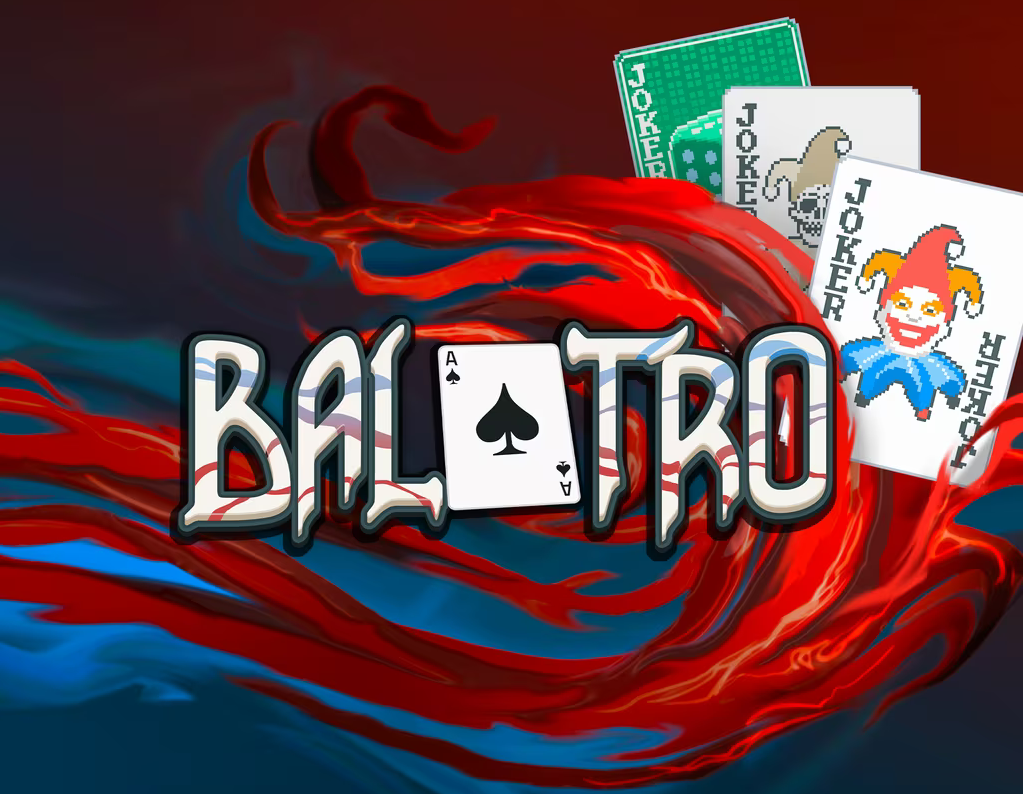
You may have heard of Balatro during the recent Game Awards when it was announced as a Game of the Year nominee alongside other titans like Final Fantasy and Wukong. Or you may have heard of it from a friend incessantly recommending it to you, only for you to shy away from the $10 price tag for what looks like a glorified solitaire app. Fortunately, Apple Arcade is still among my pile of subscriptions that I really ought to cancel, so I went ahead and gave it a spin for you!
When you start up Balatro for the first time, you see the face of a whimsical little jester floating around your screen, showing you the ropes. Draw some playing cards, play a poker hand to earn points (aka “chips”), or use a discard if you don’t like your options. Keep playing until you reach a certain score, or until you run out of hands to play. This is all simple enough, until you win your first round along with some money to spend in the shop, which is when things start to open up.
Of immediate interest in the shop are jokers, cards that sit permanently above your hand and conditionally grant you various perks and bonuses. Some jokers help you earn more money, some can add multipliers to your score each hand, a few others multiply your multipliers. There’s over 150 different jokers out there, but the shop only ever offers you a couple at a time, an excellent limitation that forces a great deal of variety between runs. Much of Balatro is about making do with what you get, so although you’re somewhat beholden to whatever the shop decides to offer, you’re also given enough agency to escape most situations with some creative thinking and timely pivoting.
That said, higher difficulty levels place restrictions on jokers that make you feel much more dependent on good shop luck. Jokers aren’t really optional in Balatro; they are the engine of any successful run, and you absolutely must secure a decent score-boosting joker early on to combat rapidly increasing score thresholds. If the one you manage to find is randomly given the “rental” debuff that charges you per round of use, your economy will be in the dirt before you have a chance to get it up and running. Or perhaps that joker happens to be one that isn’t any good in the late game, but was given the “eternal” debuff that prevents you from replacing it with a better one later, another scenario where you’re tasked with picking between a quick death or a slow one. I tend to find myself having less fun dealing with these challenges as opposed to simply playing on lower difficulties.
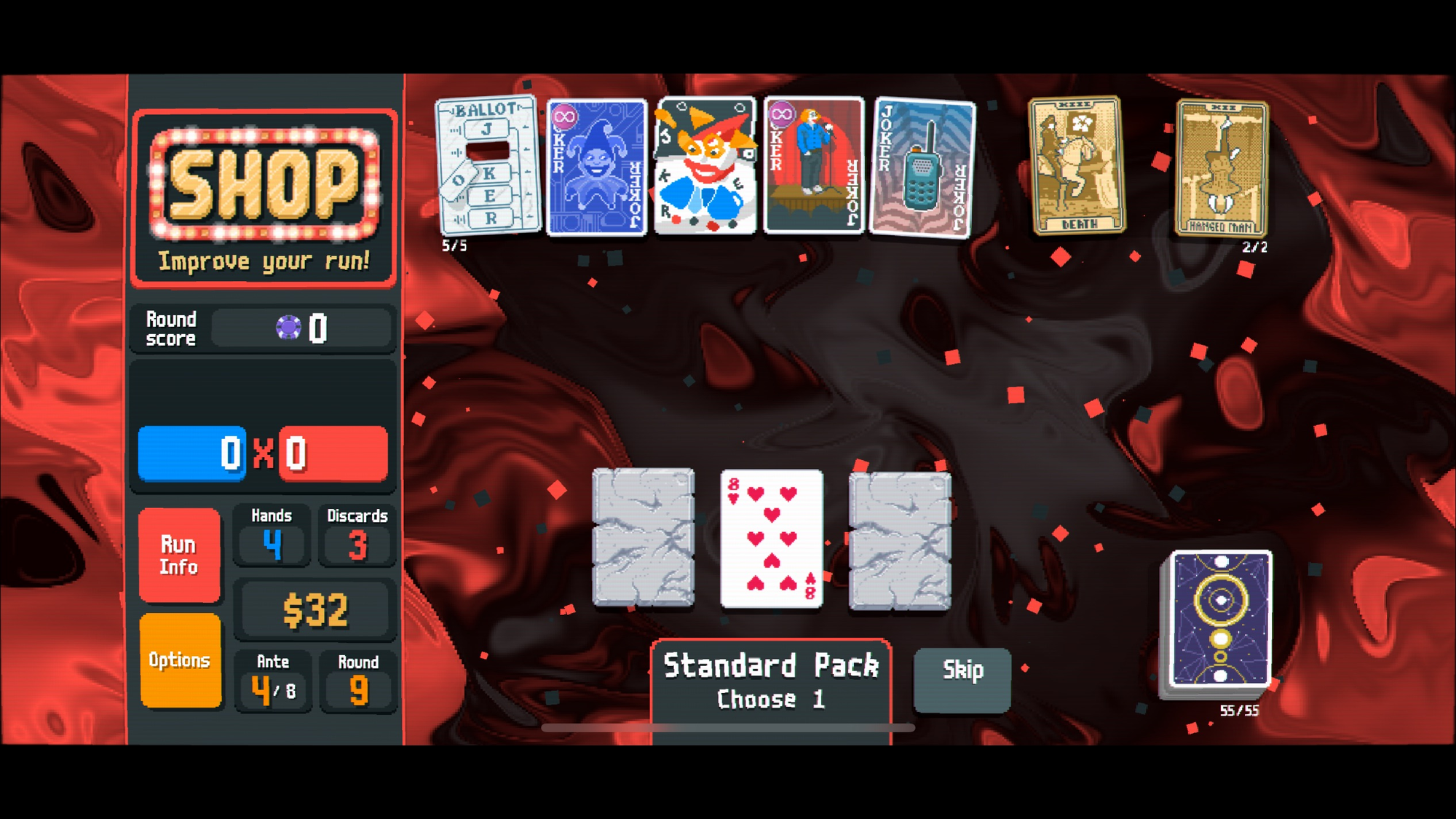
There are many other things to buy in the shop during your run besides jokers, but our helpful little jester doesn’t care to explain them, leaving us newbies to figure out what the hell the difference is between planet, tarot, and spectral cards (the names themselves offer no clues). What’s worse is that there’s no immediately obvious way to differentiate a joker in the shop from one of these “other” cards - many joker cards include a clear “JOKER” label, but others are merely random artwork depicting outer space or a road sign or something. Is a credit card a joker, or a spectral card? Or perhaps credit cards have their own category?
Luckily, it doesn’t take terribly long to figure out how to identify and use each tool on offer, which is when Balatro reaches full-blown crazy. In a nutshell, you can mutate your deck by duplicating or destroying playing cards, or by giving them other bonuses (eg. “this card scores twice per hand”). By the tail end of a run, your deck might be half spades, or it might have twenty aces and zero face cards. Such deck fixing opens up tons of synergies with jokers, a few of which are in game-breaking territory. But the game-breaking combos are the most fun ones, and like any good roguelike, Balatro has little interest in neutering those combos, preferring to challenge you only by making them difficult to set up. It’s a philosophy that prioritizes fun over perfect balance, one that suits single-player games like this one quite well.
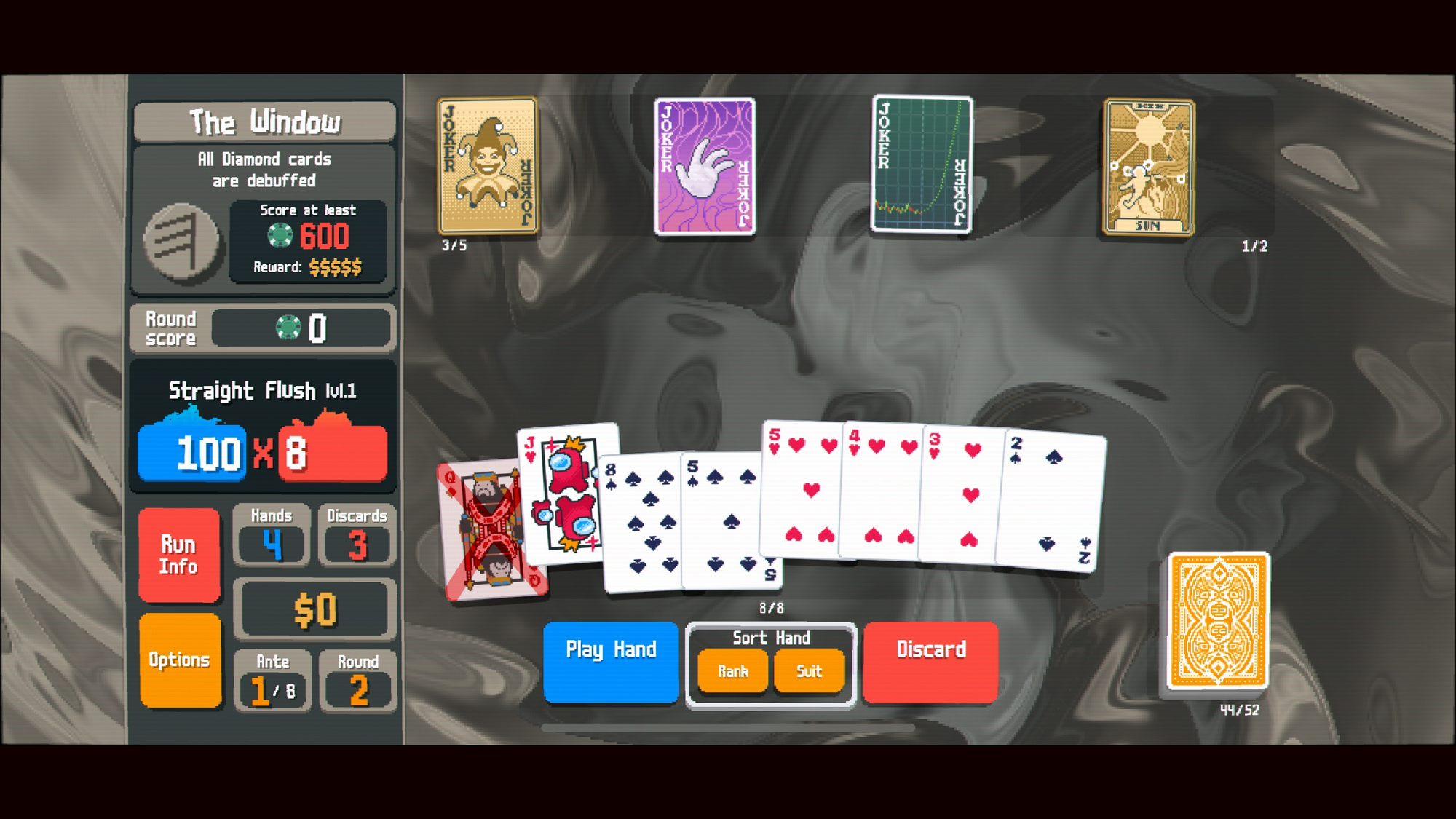
Once you start winning a bit more, you’ll unlock new starting decks, jokers, and unique challenges. Even without those incentives, it’s remarkably hard to put the game down after finishing a run. I don’t know what exactly gives Balatro such a strong “just one more time” factor, but I suspect that the overall presentation is a big part of it. Between the abundant poker themes, the “ding” sounds from each activated joker, the blinking lightbulbs bordering the “SHOP” sign, the slot machine-esque sound that plays when you buy a pack of cards… there’s no doubt Balatro wants you to feel like you’re playing some sort of souped-up video poker machine you found deep in the trenches of a casino in Vegas. It even handles better than any real casino machine, boasting near-flawless interface design and highly responsive interactions that make liberal use of haptic taps. Balatro feels so slick to play on a phone that it’s hard to believe that it was actually released for desktops and consoles first.
Unsurprisingly for a Best Independent Game award winner, it’s tough to find serious faults in Balatro. I must admit, much of my free time lately has been spent furiously discarding and redrawing, looking for the straight flush I need to push myself through to the next round. Maybe I’ll keep my Apple Arcade subscription after all.
Comments ()